

Phase 2 PFAS Settlements: What You Need for a Complete Claim
4.6.26
Throughout the country, local governments and public water systems are prioritizing testing for PFAS (per‑ and polyfluoroalkyl substances, often called “forever chemicals”), as well as collecting other necessary data to meet critical deadlines under Phase 2 of the 3M and DuPont PFAS drinking water settlements. These settlements, which resulted from the Aqueous Film‑Forming Foam multi‑district litigation (AFFF MDL No. 2873) against PFAS manufacturers, provide more than $14 billion to eligible agencies that have detected PFAS in their drinking water sources.
But the distribution of funds from these settlements is far from automatic. Although eligible public water systems are included as settlement participants by default unless they formally opted out back in 2023, they must submit extensive documentation and testing data by the summer 2026 deadlines in order to receive any payments. Settlement participants who miss deadlines or submit incorrect or incomplete claims will be excluded from this funding opportunity. After having already waived their right to file future lawsuits against 3M and DuPont over PFAS drinking water contamination by not opting out of the settlements, this is the only chance for these water systems to secure funds from these manufacturers. With billions of dollars still on the line, now is the time to prepare a clear action plan to ensure that your system’s claims are submitted correctly, completely, and on time, laying the groundwork for financial recovery.
Before You Begin: What You’ll Need to Start the Claims Process
If you plan to submit claims in the PFAS drinking water settlements on behalf of your local government or water utility, several steps must be completed first. Incorrect preparation could lead to serious errors before you even begin your claims. These errors could jeopardize funding or lead to lower-than-optimal payouts from the settlements.
First, Confirm Your Water System’s Eligibility
All water systems must confirm their eligibility for the settlements and register before the claims process can begin. For entities that own multiple water systems, such as large utility companies that provide water service in more than one area, each individual water system must be registered separately.
Determining eligibility is not always straightforward. Generally, water agencies that detected PFAS in drinking water before the end of June 2023 were assigned to Phase 1 of the settlements, for which the claims deadlines have already passed. Those that did not detect PFAS until after that date (and, for the 3M settlement, also serve more than 3,300 people) are eligible for Phase 2. However, there are limited opportunities for some Phase 1 systems to submit claims as part of the Phase 2 process, and also some circumstances under which systems serving fewer than 3,300 people could be eligible. An experienced water contamination litigation firm can help determine eligibility and ensure that registration is done accurately, ensuring a good start in the claims process.
Next, Gather PFAS Detection Data on Each Individual Water Source
To successfully submit claims in the settlements, you will need PFAS testing data that is far more comprehensive than federal programs—and many state ones—have required. The settlements require testing of PFAS concentrations at each individual water source, making it unlikely that data from past testing initiatives will suffice. For example, UCMR5 results do not meet the claims requirements because the federal program required PFAS testing only at the entry point to the distribution system, not at individual water sources. This means your system will likely need to perform extensive additional testing before preparing its claims.
As defined by the settlement agreements, a water source is or was used for drinking water, and is either:
- A groundwater well with sampling done at the wellhead; or
- A surface water treatment plant, with sampling done at the entry point into the treatment plant.
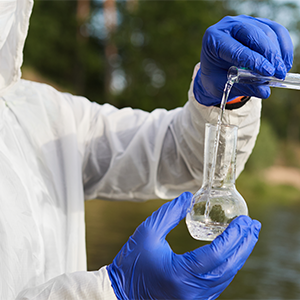
The PFAS concentrations at each of your system’s water sources, as defined above, will need to be tested using a lab-approved method and reported in your claims documentation. This data is crucial because the settlements use a complex allocation methodology that assigns a "score" to each impacted water source and uses that score as the basis for a pro rata distribution of the settlement fund. This calculation is what will ultimately determine how much funding your municipality or utility will receive from the settlements compared to other participants.
Your system's base score will be calculated using two factors:
- Level of PFAS contamination: The highest level of PFOA, PFOS, and, if present, the highest other PFAS compound, detected in that source at any time.
- Size of the water source: Annual production of the three highest producing years from 2013-2022, AND the maximum flow rate or capacity (Impacted inactive wells could also be eligible so long as they can be tested and the maximum flow rate can be documented).
Because the 3M and DuPont settlements use this allocation structure, there is no specific dollar figure that corresponds with a given size of well or level of contamination. Rather, the final payout your system will receive from the settlements depends on the amount that all other eligible water systems receive and will not be known for certain until all the claims have been received and processed.
Completing Your System’s Claims
Once you have confirmed your system’s eligibility in the settlements, registered it, and tested for all PFAS compounds at each individual water source, you will be ready to begin working on your claims. To do this, you will need to enter data into the Claims Forms for each water source owned and/or operated by your water system, including those owned or operated jointly with another agency. Below is a description of the data and documentation you will need for each of your water sources to complete your Claims Forms:
- PFAS Detection Levels
- For impacted water sources (those with any measurable PFAS detections in any concentration, regardless of state or federal regulatory levels), you will need to provide PFAS testing results with extensive documentation. Your legal counsel can help determine what information will best support your claims.
- For sources without PFAS detections, you will also need to submit documentation. Thorough reporting, even in the absence of detections, can protect your system’s ability to seek additional funding if contamination levels increase to exceed a state or federal Maximum Contaminant Level (MCL) before the end of 2030.
- Size of Each Water Source
- Annual Flow Rates: Your claims will also need to include annualized records of production from each water source from 2013-2022. Incorrect calculation of this data could result in errors that could interfere with your system’s receipt of funds.
- Maximum Flow Rate: Additionally, you will need to report the maximum flow rate, or maximum capacity, for each water source. As there are several options for documentation of these rates, your legal counsel can help determine which documents best support your claims.
What if Some Required Data is Unavailable?
In an ideal situation, every utility would have easy access to all the data and documentation listed above. For many, however, frequent changes in testing requirements and adjustments to recordkeeping practices over the years may have led to missing or incomplete information. If this is the case for your system, many hours of analysis and data compilation may lie between you and the compensation your community deserves.
Fortunately, experienced water contamination litigation firms have the resources and expertise to guide municipalities and water systems through the settlement process, ensuring that claims are prepared and filed correctly. For example, SL Environmental Law Group (SL) helps settlement participants complete all the steps detailed above, while also offering advice on how to accomplish positive outcomes—even if some required data may be unavailable.
If your system has not consistently tracked annual flow rates from each water source, SL can assist in preparing an estimate of the source’s historical production to provide to the Claims Administrator. Similarly, our firm can also help you calculate a water source’s maximum flow rate based on historical production. Precise estimates can open the door to settlement participation for your system and help you avoid leaving potentially significant funding on the table.
How Can Legal Assistance Support Your System’s Claims?
Even if the data required to file PFAS drinking water settlements claims is readily available, strategic decisions and experienced interpretations of each settlement’s terms and procedures can lead to enhanced outcomes for participants, so it is crucial to dedicate appropriate time and resources to claims preparation. Experienced water contamination law firms like SL can take this burden off your shoulders and help identify benefits of the settlements that could lead to enhanced payouts.
Certain strategies can be helpful if your water system has already taken action, such as limiting the use of contaminated water sources, to reduce the total PFAS concentration in water delivered to customers. These strategies provide opportunities for your water system to be fairly compensated for PFAS contamination of water sources that would otherwise be valuable assets to your community.
Help is Available for PFAS Settlement Claims
The 3M and DuPont PFAS drinking water settlements may represent a significant funding opportunity for your local government or utility. However, securing compensation depends on completing comprehensive PFAS testing, compiling accurate flow rate records for every water source in your system, and correctly submitting extensive documentation by rapidly approaching deadlines.
These settlements can be complex to navigate, but you do not have to manage these challenges on your own. By working with legal counsel with decades of experience in water contamination litigation, your water system can better ensure compliance with each settlement’s requirements, optimize its claims, and ultimately secure the resources to which your community may be entitled.
To learn more about how SL Environmental Law Group’s PFAS legal team can help your local government or water system, please request your free office hours here.


Our attorneys are licensed in various jurisdictions, including California, Illinois, Massachusetts, Michigan, and New Hampshire. Please refer to individual attorney bios for specific licensure.
This web site is designed for general information only. The information presented at this site should not be construed to be formal legal advice nor the formation of a lawyer/client relationship.